
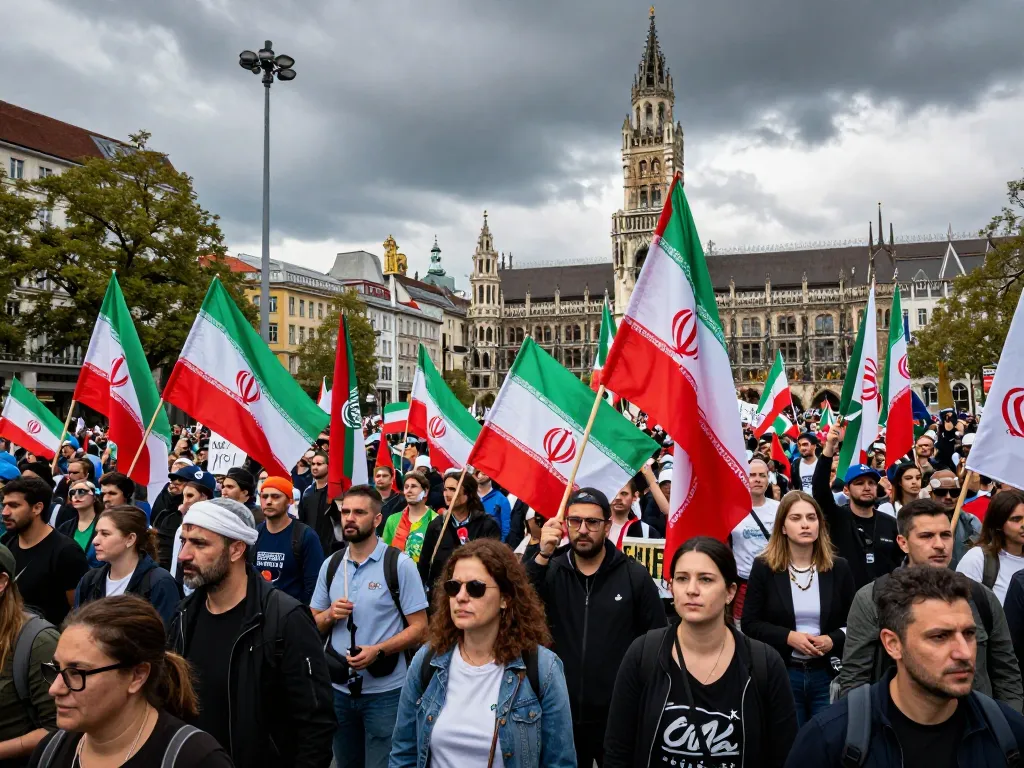
The Context of the Massive Munich Rally Focused on Iran
The recent Massive Munich rally focused on Iran drew approximately 250,000 people to Munich, Germany, marking one of the largest demonstrations against the Iranian government in recent history. This rally, held on February 14, 2026, coincided with the Munich Security Conference, which brought together world leaders and highlighted global security issues. The confluence of these two significant events amplified the voices of Iranian expatriates and supporters of democracy, creating a powerful platform for expressing dissent against the authoritarian regime in Iran.
Understanding the Political Landscape in Iran
Iran has long been characterized by its complex political landscape, which includes a mix of theocratic rule and authoritarian governance. The current regime, led by the Islamic Republic, has faced significant internal challenges, including popular protests against economic mismanagement, human rights abuses, and the lack of political freedoms. The demonstrations have been notably fierce since 2022, fueled by discontent over the country's handling of economic issues and international isolation.
The 2026 rally reflects a growing sentiment among Iranians both inside the country and abroad, calling for a transition towards a more democratic governance structure. The rise of social media and international awareness of the Iranian people's struggles has galvanized support for protests, making the Munich rally a focal point for a broader movement advocating for change.
The Role of the Munich Security Conference
The Munich Security Conference, an annual event focused on international security policies, provides a unique backdrop for activism. By holding the rally during this high-profile event, demonstrators aimed to capture the attention of global leaders and international media. The presence of key decision-makers highlights the Iranian struggle not just as a regional issue, but as a matter of global concern.
This year, world leaders were confronted with the palpable urgency of Iranian demands for freedom and accountability, which resonated against the backdrop of discussions on broader security issues, including regional stability and counterterrorism.
Analyzing the Scale and Impact of the Rally
Demographics of Participants and Their Motivations
The demographics of the crowd were diverse, comprising not just Iranians but also allies from various backgrounds who support the cause of freedom and democracy in Iran. Many participants were motivated by personal narratives of oppression or the wish for a better future for their homeland. This broad coalition highlights a sense of solidarity across borders, as individuals from various nations rallied for a unified message against tyranny.
Moreover, younger generations, frustrated with the status quo, played a significant role in mobilizing participants, showcasing their commitment to democracy and reform through social media platforms and grassroots organizing.
Media Coverage and Public Perception
The extensive media coverage surrounding the rally played a critical role in shaping public perception. News outlets reported on the scale and passion of the protests, presenting them as a significant challenge to the Iranian regime. Visual images of large crowds, vibrant banners, and impassioned speeches were disseminated widely, capturing the attention of audiences worldwide.
Moreover, the rally sparked conversations in various media about the implications of continued oppression in Iran and the global responsibility to act in support of human rights. Public engagement on social media platforms further amplified the messages of the protesters, making it a trending topic and generating awareness beyond traditional media channels.
Immediate Reactions from Global Leaders
The reactions from global leaders who attended the Munich Security Conference varied, with many expressing solidarity with the protesters. Some leaders called for renewed diplomatic efforts to hold the Iranian regime accountable for its actions and to support a peaceful transition towards democracy. This response indicates a growing recognition that the Iranian situation is not merely an internal affair but one that requires international attention and intervention.
Furthermore, discussions about potential sanctions and policies aimed at promoting human rights in Iran gained momentum, suggesting that the rally has potential implications for future diplomatic engagements with the Iranian government.
Demonstrators’ Messages and Goals
Key Themes from Protest Banners and Speeches
During the rally, demonstrators carried banners and placards with messages emphasizing freedom, democracy, and the need for regime change. Key themes included demands for justice for victims of the regime's violence and calls for the international community to recognize the Iranian people's struggle.
Speeches from prominent figures, including exiled leaders and activists, echoed these sentiments, articulating a vision for a democratic Iran devoid of the present regime's authoritarian practices. The emotional weight of their words resonated deeply with the audience and served to galvanize further support.
Support for Reza Pahlavi and Opposition Groups
One of the central figures mentioned during the rally was Reza Pahlavi, the son of the last Shah of Iran. His presence symbolized a broader call for unity among opposition groups, many of whom have long sought to establish a democratic government in Iran. Pahlavi's speeches focused on hopeful future scenarios for Iran, emphasizing the importance of collective action among Iranians and the support of the international community.
This show of unified support for opposition leaders signifies not only a shift in attitudes among younger generations but also a strategic coalition among diverse dissident groups, urging collaboration to dismantle the existing regime.
Calls for International Solidarity and Action
A critical goal of the rally was to garner international solidarity and ensure that the plight of Iranian citizens remains on the global agenda. Protesters called on foreign governments and organizations to pressure the Iranian regime and offer support for democratic movements.
They emphasized the need for sustained international engagement, highlighting that global security is intertwined with the promotion of human rights and democracy in Iran. This rally has thus become a call to action for global citizens to advocate for a just cause.
Challenges Faced by Protesters
Security and Safety Concerns During the Rally
While the demonstration was largely peaceful, there were heightened concerns regarding security. Organizers implemented measures to ensure the safety of participants, but the fear of counter-protests or hostile actions from pro-government supporters loomed large. This aspect reflects the broader risks that Iranian protesters face, both domestically and internationally.
Nevertheless, the unity and resolve displayed by demonstrators served to counterbalance these fears, illustrating a collective commitment to stand firm in their demands for change.
Counter-Movements and Government Responses
In the face of this significant rally, Iranian authorities and their supporters attempted to delegitimize the movement through various means, including misinformation campaigns and public statements that framed the protesters as outsiders or troublemakers. The Iranian government’s attempts to suppress dissent continue to demonstrate its vulnerability and fear of losing control.
Understanding these counter-movements is crucial for assessing the true impact of protests and for informing future strategies among opposition groups.
Addressing Misconceptions About the Protest
Despite the overwhelming support garnered, misconceptions about the rally and the motives of its participants persist. Many detractors have attempted to portray the movement as driven solely by exiled elites or foreign agendas. Addressing these misconceptions is vital for maintaining momentum and ensuring that the voices of those on the ground are accurately represented.
Efforts to educate the public about the diverse motivations of participants can help dispel these myths, reinforcing that the call for change comes from a broad spectrum of Iranian society.
The Future of the Movement: What Comes Next?
Long-Term Goals for Iranian Democracy
The long-term vision of the protest movement extends beyond mere regime change; it aspires to establish a democratic framework that guarantees human rights and civil liberties. Demonstrators have articulated specific goals, including electoral reforms, freedom of the press, and judicial independence as foundational pillars for a new governance structure.
Engaging in dialogue with a broad array of stakeholders, including civil society organizations and democratic nations, will be crucial for laying the groundwork for such a transformation.
Potential for Future Protests and Global Engagement
Given the success of the Munich rally, there is potential for future protests to gain traction and momentum. Organized movements can leverage social media platforms to mobilize support and maintain visibility regarding the Iranian struggle. Global engagement is essential, as the Iranian issue must remain relevant in international discourse.
International partnerships and solidarity movements can provide crucial support and amplify the voices of those who are demanding change.
Emerging Trends in Activism and Technology
As activism continues to evolve, new technologies play a significant role in shaping the future of protest movements. Iranians abroad are leveraging technology to coordinate efforts, spread awareness, and connect with others who share their goals. This approach not only enhances their ability to organize but also enables them to reach a wider audience through digital platforms.
These emerging trends suggest that the fight for democracy in Iran may increasingly rely on innovative strategies that harness technology’s power to mobilize and inform supporters globally.